It’s a hard time, friends. I want to share something that brings me hope.
First, let’s not skip over that “hard time” bit. I’m speaking as an American: anxiety is real, and widespread, and it cuts deep into our daily lives.
In the conservation space, in the tech world. In small towns and rural areas where so many jobs have been recklessly cut by the Fed, and woods and water and creatures are under attack. In our job searching, our family relationships, the price of bread. Maybe everywhere. Maybe all of us can feel it. If you’re feeling it: I see you.
Here’s my hope. It’s not abstract, and it’s not in the future. It’s the community garden I volunteer at, through Lower Nehalem Community Trust.
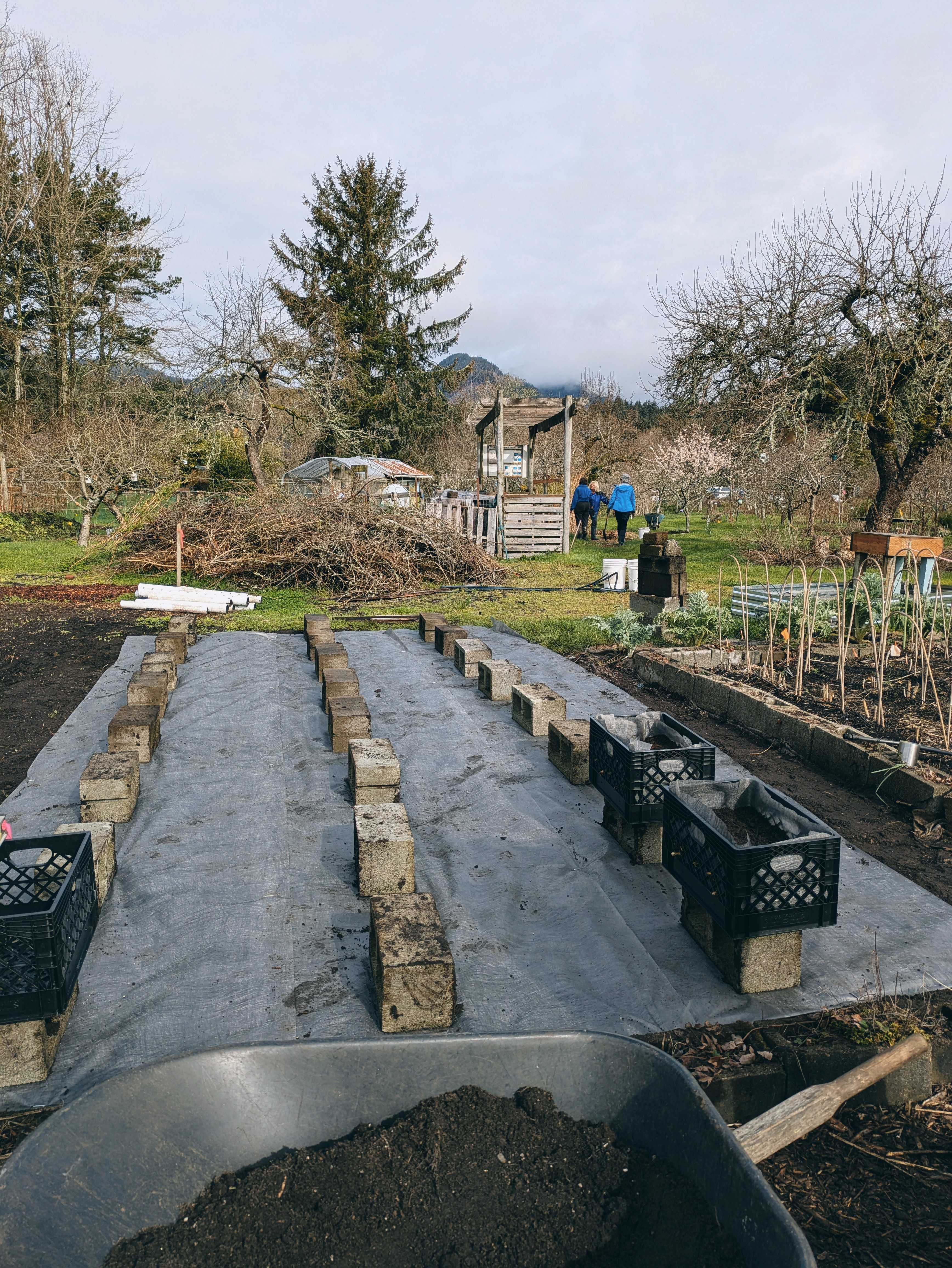
It’s called Alder Creek Farm, and it’s different from other community gardens I’ve heard of, in that all volunteers work together to tend the whole thing. We raise ducks, tend orchards, make compost, and grow enough row crops to supplement our local schools and a church food pantry.
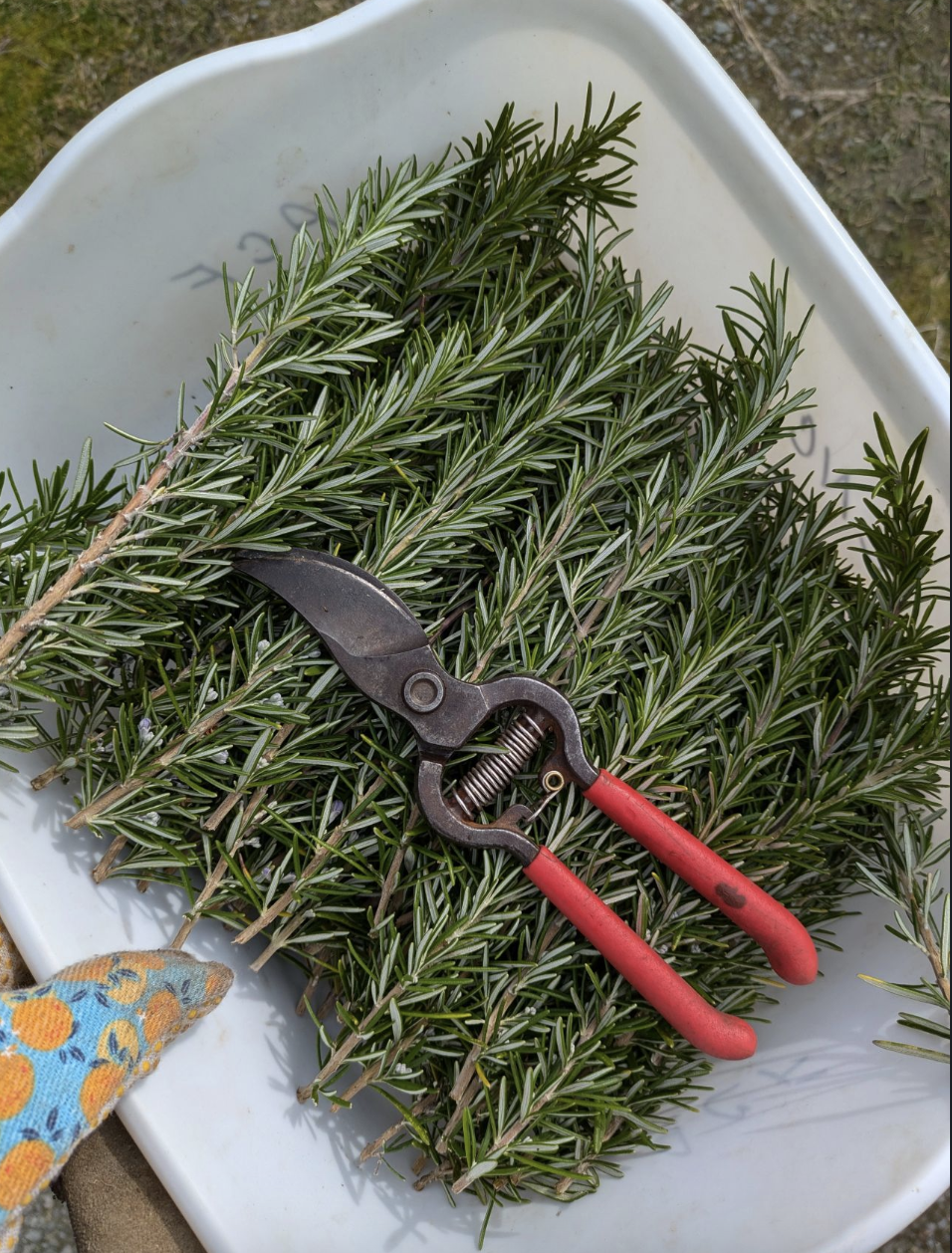
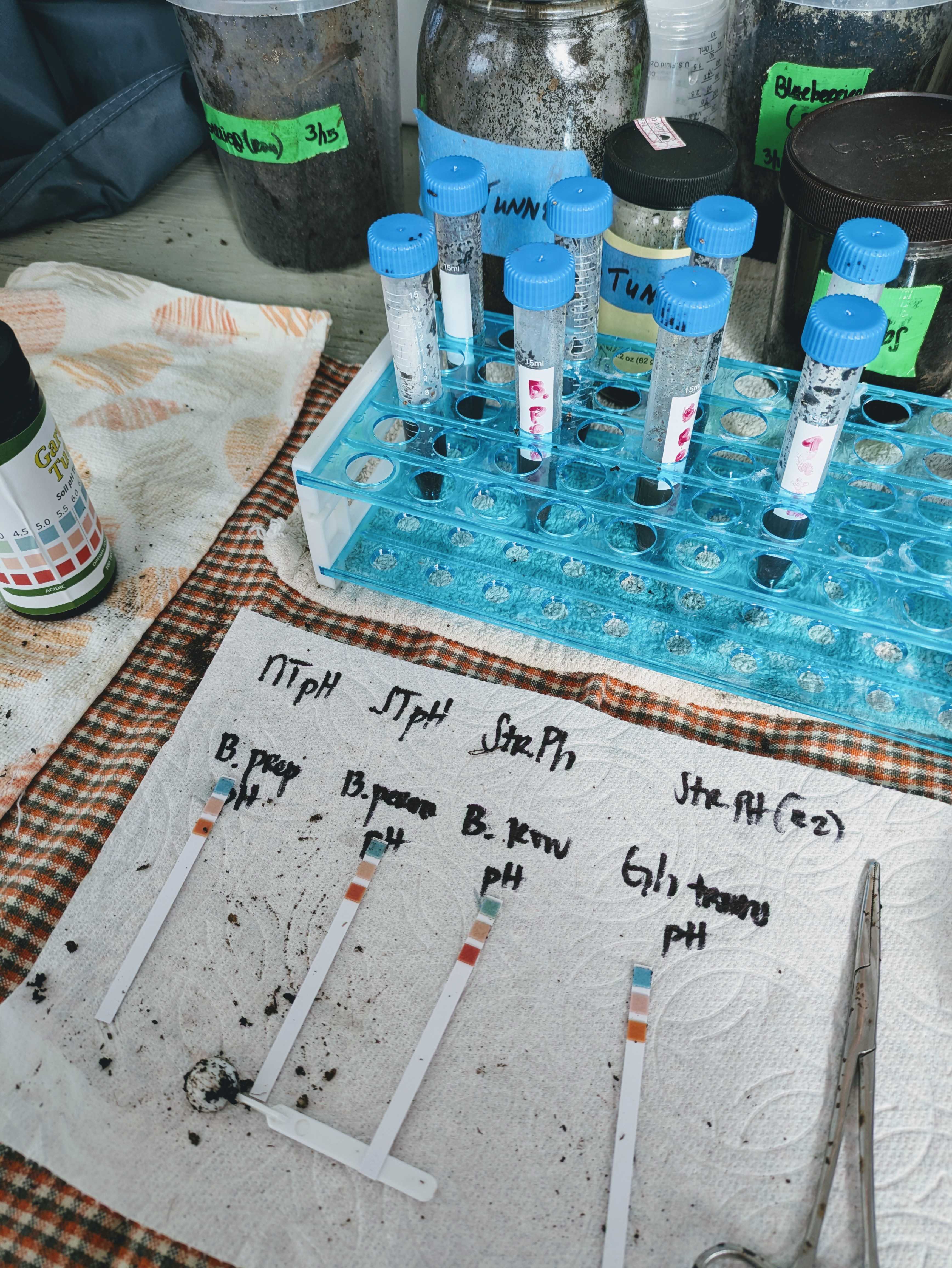
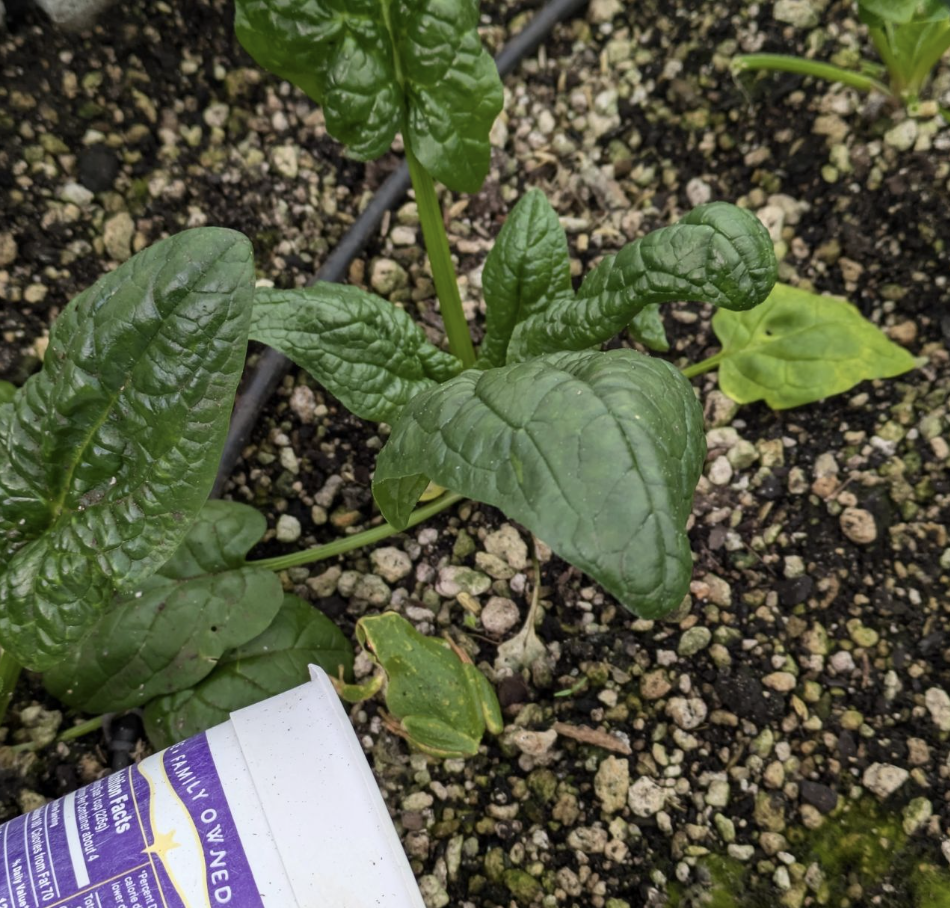
Well—the experienced gardeners do that stuff. I follow directions. I sort and stack donated boxes so they’re ready when we need them for harvest. Or I clip rosemary to make cuttings for new plants. Or I take soil samples and run tests for pH, nitrogen, phosphorus, potassium. Or I ask my neighbor to tell me which tiny plants in the First Foods bed are weeds, and then I dig them out. At some point, I may understand how this all contributes to the beautiful whole.
While I’m working, I’m having pleasant conversations with interesting strangers, who are soon not strangers. Or I’m kneeling in silence, scenting the soil. Or I’m so absorbed in learning and figuring that I’m hardly conscious of time—or anything else.
Why does this give me hope?
Maybe because it gives my body useful and good and pleasant work to do, when so much else feels impossible to accomplish.
Maybe because it’s a free choice I can make to put fresh, organic, affordable, and locally-grown food on my table and my neighbors’.
Definitely because it’s a way the world should be—and that’s not true in some abstract potential future we have to fight for. It’s here now. I’m making it, with and in and for my community.
I’d like to stop there: look, hooray! a happy conclusion for once! But this isn’t a conclusion. It isn’t a solution, to the awful realities we cannot look away from. At increasing rates, people are going hungry, going bankrupt. Losing work they loved, losing their homes, losing their medical insurance. People are afraid, anxious, angry, and with plenty of good reasons. I’m all those things; how about you? And a little work in a garden won’t solve all that. But it is one way I get to make response.
Not only to these specifically terrible times. Also to the fact that I’ve always lived under an oppressive, unjust system that sees land and water as resources to be exploited. That understands food as a consumer product, with access determined by how much money you have. A system that actively creates poverty, disease, and disability, while despising the poor, the sick, and the disabled. A system that encourages fear, anxiety, and anger as conditions of daily life.
I don’t choose that. It’s a pervasive system, though, deeply entrenched. I can’t opt out, because that’s not a decision that can happen on the level of individual choice. There is no away. There is no more frontier, with its illusion of independence—nor should there be again. That was always a poster child for the same oppression, the one where the powers invested in our suffering pit us against each other, and tell us—falsely—we can make it on our own.*
The story of my adulthood is partly the story of running up over and over against the limitations of what an individual can do. Yes, that’s been dispiriting. I see why people choose their polite fictions (compassionate conservativism), their escapist fantasies (colonizing Mars), or their righteous thrill at making someone else suffer for their own fury (MAGA). As much as a person can understand something emotionally without subscribing to it, I think I do.
But these things are false. Scratched just lightly, they show beneath the surface a lack of faith, a lack of hope, and a lack of love: for human beings, for the living earth, for the future. I think what they really show is how wounded we are, and how desperate to heal.
It’s hard to make healing choices (faith, hope, love, care) when oppression is the background of your society. And yet: people do it, every day. It takes a thousand forms. Participating in mutual aid. Charging rent on your house that local tenants can actually afford. Taking extra time to really listen in conversation. Offering your couch to friends fleeing disaster. Volunteering with organizations that educate, clothe, feed, and comfort. Choosing the truest and the kindest words when you’re in conflict with someone you love. Bringing flowers.
Sometimes I hear folks speak about these choices as their resistance, and I feel that. Caring action swims against the flood-stage stream of oppression. Resistance isn’t a word that belongs only in politics—though I’d argue that everything I listed above is a political choice. And a harder one than resentful isolation, or dreaming of grand solutions you can’t effect.
And no one makes these good, hard choices successfully on their own. So it helps me, I’ve discovered, to surround myself with people who practice consideration and care. To actively talk with, listen to, and learn from them.
In doing that, I’m finding rubrics that help me not fail as often as I might, in my own choosing. Is this action kind? Is it holistic? Does it promote freedom from want and oppression? Does it promote freedom of time and choice? Does it make room for joy?
The poet Rosemary Wahtola Trommer put it this way once, and the echo has been with me ever since: Is this the path of love?
Community gardening as we do at Alder Creek Farm is all those things. And I admire it specifically because it amplifies a personal choice by the virtue of a whole community choosing together to practice active care. It’s a joy and a privilege to be the smallest part of this.**
This is a feral time we’re living through. And also: in a specific way that I never knew how to be until a group of folks working together handed me the opportunity to try, I am grateful to be here—to be hoping, and loving, and keeping faith right now with my hands.
*Songwriter Marian Call puts it like this: “Independence is a myth. But loneliness is real.”
**And it’s hard work, and sometimes it’s uncomfortable, and sometimes I’m tired or in a bad mood. All of which is okay. We share those things, too.
 Tara K. Shepersky